

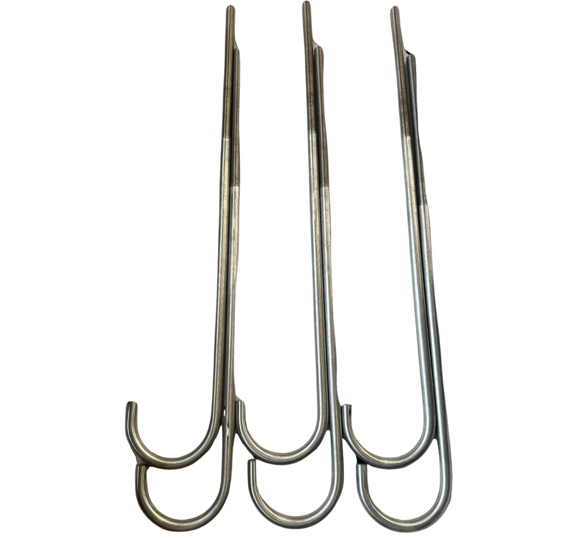
Anchor bolts are critical components in construction and industrial projects, as they securely fasten structural elements and heavy machinery to concrete foundations. Proper installation of anchor bolts ensures stability, load resistance, and long-term safety of buildings, equipment, and infrastructure. Reputed companies such as E.S HAJI & CO., along with leading Anchor Bolts manufacturers in India, supply precision-engineered anchoring solutions that meet modern construction standards. Understanding the correct installation process is essential to achieve optimal performance and avoid costly structural issues.
This guide explains anchor bolt installation step by step, covering preparation, methods, best practices, and common mistakes to help engineers, contractors, and builders ensure reliable foundation anchoring.
Understanding Anchor Bolts and Their Purpose
Anchor bolts are fasteners used to attach structural and non-structural elements to concrete. They transfer loads from columns, base plates, and machinery into the foundation, resisting tension, shear, vibration, and uplift forces. Anchor bolts are widely used in buildings, bridges, power plants, industrial machinery bases, and infrastructure projects.
Depending on the application, anchor bolts may be installed during concrete pouring (cast-in-place) or after the concrete has cured (post-installed). Choosing the right type and installation method is crucial for achieving structural integrity.
Types of Anchor Bolts Used in Concrete Foundations
Before installation, it is important to understand the different types of anchor bolts commonly used:
Cast-in-Place Anchor Bolts
These bolts are positioned before concrete is poured. Once the concrete cures, the bolts become permanently embedded, offering high load-bearing capacity. They are commonly used for columns, heavy machinery, and structural steel.
Expansion Anchor Bolts
Installed in pre-drilled holes, these bolts expand when tightened, gripping the concrete. They are suitable for medium-duty applications and retrofitting projects.
Chemical or Adhesive Anchor Bolts
These use epoxy or chemical adhesives to bond the bolt to the concrete. They offer high strength and are ideal for heavy loads and applications requiring precise placement.
Sleeve and Wedge Anchors
Often used for light to medium loads, these anchors are quick to install and commonly used in non-structural applications.
Role of Experienced Manufacturers and Suppliers
The quality of anchor bolts plays a major role in installation success. Working with trusted manufacturers ensures compliance with material standards, accurate threading, and consistent performance.
In India, demand for precision anchoring systems is growing rapidly due to infrastructure and industrial expansion. Anchor Bolts manufacturers in Chennai play a significant role in supporting construction, power plants, refineries, and heavy engineering industries in the region by supplying high-quality, custom-engineered anchor bolts.
Tools and Materials Required
Proper tools and materials ensure accurate and safe installation. Common requirements include:
- Anchor bolts (as per design specifications)
- Concrete drill or hammer drill
- Drill bits of appropriate diameter
- Measuring tape and marking tools
- Anchor bolt templates
- Level and alignment tools
- Torque wrench
- Epoxy or chemical adhesive (if required)
- Cleaning brush and compressed air
Step-by-Step Process to Install Anchor Bolts
Step 1: Review Structural Drawings and Specifications
Before installation, carefully review structural drawings, load requirements, and anchor bolt specifications. Confirm bolt size, length, grade, spacing, and embedment depth. Errors at this stage can compromise the entire foundation.
Step 2: Mark Anchor Bolt Locations
Accurate positioning is critical. Use layout drawings to mark the exact anchor bolt locations on the concrete foundation. Templates or base plates are often used to ensure correct spacing and alignment.
Step 3: Installing Cast-in-Place Anchor Bolts
For new foundations, cast-in-place installation is the most reliable method.
- Position anchor bolts using a template or steel frame before concrete pouring.
- Ensure bolts are perfectly vertical and aligned.
- Secure bolts firmly so they do not shift during concrete placement.
- Pour concrete carefully and vibrate it to remove air pockets.
- Allow the concrete to cure fully before applying any load.
This method provides excellent strength and long-term durability.
Step 4: Drilling Holes for Post-Installed Anchor Bolts
For existing concrete foundations, post-installed anchor bolts are used.
- Drill holes to the specified diameter and depth using a hammer drill.
- Ensure holes are straight and cleanly drilled.
- Avoid damaging reinforcement bars during drilling.
Precision at this stage ensures proper anchoring performance.
Step 5: Cleaning the Drill Holes
Cleaning is a critical but often overlooked step.
- Use a wire brush to remove dust from inside the hole.
- Blow out debris using compressed air.
- Repeat brushing and blowing until the hole is completely clean.
Poor cleaning can significantly reduce anchor bolt load capacity.
Step 6: Installing Mechanical Anchor Bolts
For expansion or wedge anchors:
- Insert the anchor bolt into the hole.
- Tap gently with a hammer until it reaches the required depth.
- Tighten the nut using a torque wrench to activate expansion.
Always follow manufacturer torque specifications to avoid over-tightening or under-tightening.
Step 7: Installing Chemical Anchor Bolts
Chemical anchoring is ideal for heavy loads and precision applications.
- Inject epoxy or adhesive into the cleaned hole.
- Insert the anchor bolt slowly while twisting to ensure even adhesive distribution.
- Allow the adhesive to cure for the specified time before applying load.
This method provides excellent pull-out resistance and flexibility in bolt placement.
Step 8: Alignment and Final Tightening
Once the bolts are installed:
- Check alignment using a level or template.
- Place base plates or structural elements over the bolts.
- Tighten nuts evenly using a torque wrench.
Proper alignment ensures load distribution and structural stability.
Quality Checks and Load Testing
After installation, quality checks are essential:
- Verify bolt projection and embedment depth.
- Inspect alignment and spacing.
- Conduct pull-out or torque testing if required by project specifications.
Testing ensures compliance with safety and engineering standards.
Common Mistakes to Avoid
Improper installation can lead to serious structural issues. Common mistakes include:
- Incorrect bolt size or grade selection
- Poor hole cleaning
- Misalignment during installation
- Applying load before concrete or adhesive has cured
- Ignoring torque specifications
Avoiding these mistakes ensures long-term performance and safety.
Applications of Anchor Bolts in Construction and Industry
Anchor bolts are widely used in:
- Structural steel columns
- Pre-engineered buildings
- Heavy machinery foundations
- Power and energy projects
- Bridges and flyovers
- Industrial equipment installations
Their versatility makes them indispensable in modern construction.
Benefits of Proper Anchor Bolt Installation
Correct installation offers multiple advantages:
- Enhanced structural stability
- Improved safety and load resistance
- Reduced maintenance and repair costs
- Longer service life of structures and machinery
- Compliance with engineering and safety standards
Future Trends in Anchor Bolt Installation
As construction technology advances, anchor bolt installation is becoming more precise and efficient. Innovations include high-performance adhesives, corrosion-resistant coatings, and digital layout tools for accurate placement.
Sustainability and safety standards are also influencing the development of advanced anchoring solutions, making quality installation more important than ever.
Installing anchor bolts in a concrete foundation is a critical process that directly impacts structural integrity and safety. From selecting the right bolt type to precise placement and proper curing, every step must be executed with care and accuracy. Whether using cast-in-place or post-installed methods, following best practices ensures reliable performance under heavy loads and dynamic conditions.
